
Mastering Infection Control in the Home Setting: Essential Practices for Caregivers
In home care, where patients receive support in familiar but unpredictable environments, preventing the spread of infections is critical. Caregivers must treat every situation with caution, as pathogens can easily transfer between homes or from surfaces to vulnerable individuals. The core principle is straightforward: apply rigorous infection prevention to protect clients, yourself, and others. This guide covers the key elements from standard precautions to practical techniques that reduce risks effectively.
1. Identify Standard Precautions: The Baseline for All Care
Standard precautions form the foundation of infection prevention in any healthcare setting, including homes. These minimum practices apply to **all** patient care, regardless of whether an infection is suspected, confirmed, or unknown.
They assume that blood, body fluids, secretions, excretions (except sweat), non-intact skin (such as cuts or rashes), and mucous membranes may contain transmissible germs. Key components include:
- – Frequent hand hygiene (washing or sanitizing).
- – Use of personal protective equipment (PPE) like gloves, masks, gowns, and eye protection.
- – Respiratory hygiene and cough etiquette (covering mouth with elbow or tissue).
- – Safe handling and disposal of sharps (e.g., razors).
- – Regular cleaning and disinfecting of surfaces and equipment.
- – Proper disposal of waste (e.g., double-bagging soiled items).
- – Isolation of known infectious agents to limit spread within the household.
By treating every surface and contact as potentially contaminated, caregivers break transmission cycles early.
2. Understand When, How, and Why to Use Personal Protective Equipment
Personal protective equipment (PPE) minimizes exposure to hazards like splashes, sprays, or direct contact with contaminants. In home settings, use PPE whenever there’s potential for exposure to blood, body fluids, or respiratory droplets.
–  Gloves: Wear for tasks involving direct or indirect contact with contaminants, or if you have wounds, rashes, or cracked skin on your hands. Always wash hands before donning and after removing gloves.
– Masks (surgical or N95): Use when airborne transmission is possible or to shield mucous membranes from splashes, coughs, or sneezes.
– Face shields or goggles: Protect eyes from bodily fluid splashes or respiratory droplets.
– Disposable gowns: Employ in close-contact situations with high contamination risk, such as severe diarrhea, C. difficile cases, or incontinence episodes where fluids could soil clothing or skin.
Hand hygiene remains essential around PPE use—wash with soap and water for at least 20 seconds (or sing “Happy Birthday” twice) when soap is available; use sanitizer as backup, but switch to soap after 2–3 uses.
3. Identify 2 Ways to Keep Hands Clean While Out in the Field
Hand hygiene is the single most effective way to stop infection spread, especially when moving between locations.
Two practical methods for field work:
-
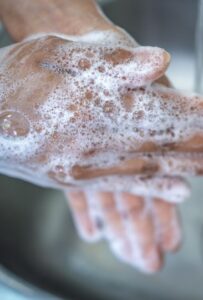 A. Soap and water washing: Use whenever available—scrub for at least 20 seconds. Ideal times include upon entering/exiting a client’s home, after contact with contaminated items, before/after personal care or pet handling, and after food contact.
 - B. Alcohol-based hand sanitizer as backup: Apply when soap and water aren’t accessible (e.g., between visits). Use generously, rub until dry, but limit to 2–3 applications before switching to soap and water to remove buildup.
Additional field tips: Carry sanitizer in an accessible pocket, wash upon exiting your car before entering a home, and clean hands thoroughly before leaving to avoid taking germs home.
4. Understand the Chain of Infection
The chain of infection explains how pathogens spread and where interventions can break the cycle. It consists of six links: infectious agent (pathogen), reservoir (where it lives), portal of exit, mode of transmission, portal of entry, and susceptible host.
One key component is the mode of transmission—the way germs move from the reservoir to a new host. Common modes in home care include:
- – Direct contact (e.g., touching contaminated skin or fluids).
- – Indirect contact (e.g., via hands, surfaces, toys, or equipment).
- – Droplet transmission (e.g., from coughs or sneezes).
Breaking this link through hand hygiene, surface cleaning, covering coughs, and PPE use is highly effective in preventing spread.
Effective infection control in home settings relies on consistent application of these practices. By prioritizing hand hygiene, proper PPE, clean techniques, and awareness of transmission risks, caregivers create safer environments for everyone involved. Stay vigilant, report concerns promptly, and remember: small habits prevent big problems.
At Hearts at Home Senior Care, we give our staff the skills and knowledge to give excellent care to their clients and this is a great way to bring us together and learn. Please contact our office if you have any home care assistance needs.
https://heartsathome.com/houston/services/personal-care/

Megan Barr, RN
Director of Nursing
Megan Barr serves as Director of Nursing and has more than 9 years of experience as a nurse most of which was spent in long term care serving the elder population. While working as a RN at a LTC, she found a passion in caring for the elderly.
Megan attended Lee College where she received an associates degree in nursing.